Public Square Discussion: ICWA Leaders Perspectives on Protecting Native Families and Tribal Sovereignty
This has ended.
If you attended, let the organizer know by recording your Impact!
About
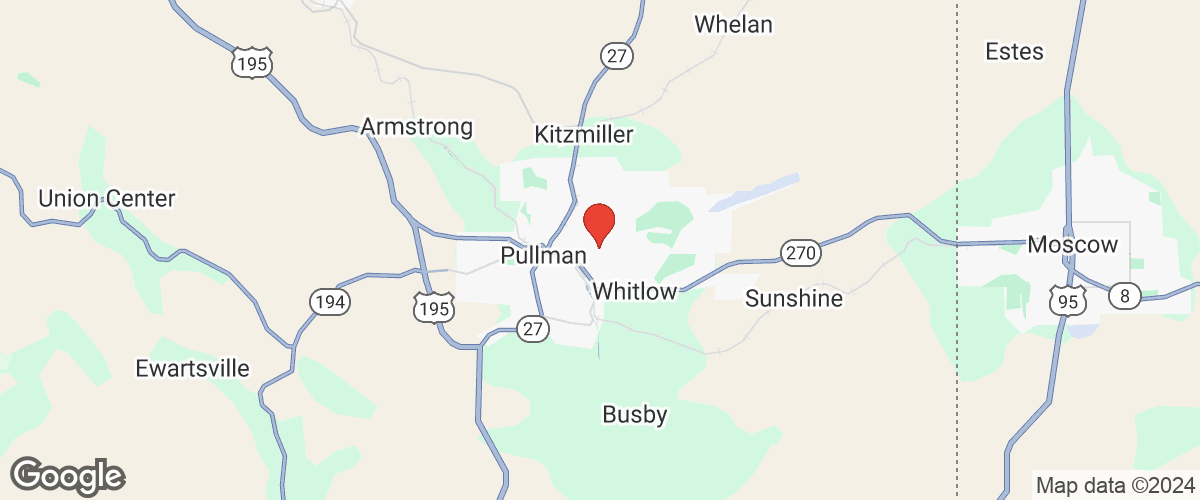
Join us for a Public Square discussion on the topic of Native Families’ rights and Tribes’ sovereignty. The discussion will take place on Wednesday, Sept. 27 from 3-4 p.m. in Butch’s Den in the CUB and livestreamed via the CCE’s YouTube channel.
Zoe Higheagle Strong, Vice Provost for Native American Relations and Programs, will moderate this excellent panel. Higheagle Strong will be joined by Sarah Kastelic, Executive Director of The National Indian Child Welfare Association (NICWA) and Kyra Antone, Communication Specialist for NICWA.
As with all Public Square discussions, we want to hear from you--there will be a live Q&A session in which panelists will take your questions about issues that matter most to you.
Contact: dave jones at dave.jones@wsu.edu
Acknowledgement of America’s First Peoples
Washington State University acknowledges that its locations statewide are on the homelands of Native peoples, who have lived in this region from time immemorial…The University expresses its deepest respect for and gratitude towards these original and current caretakers of the region…We also pledge that these relationships will consist of mutual trust, respect, and reciprocity.
As a land grant institution, we also recognize that the Morrill Act of 1862 established land-grant institutions by providing each state with “public” and federal lands, which are traced back to the dispossession of Indigenous lands. In 1890, Washington State received 90,081 acres of Indigenous Lands designated to establish Washington State University (see data). Washington State University retains the majority of these lands to this day. We acknowledge that the disposition of Indigenous lands was often taken by coercive and violent acts, and the disregard of treaties. For that, we extend our deepest apologies. We owe our deepest gratitude to the Native peoples of this region and maintain our commitment towards reconciliation.
Following its passage as federal law more than 40 years ago, the Indian Child Welfare Act (ICWA) has protected the well-being and best interests of Indian children and families. ICWA affirmed the inherent rights of tribal nations to be involved in child welfare matters involving their members while maintaining family integrity and stability by keeping Indian children connected to their community and culture.
A series of legal challenges have been levelled against ICWA, with Haaland v. Brackeen (formerly Brackeen v. Zinke and Brackeen v. Bernardt) recently challenging the law on constitutional grounds. Haaland v. Brackeen, brought by Texas (and previously Indiana and Louisiana) and several individual plaintiffs, was heard in federal district court, the Fifth Circuit Court of Appeals, and then the Fifth Circuit en banc before being heard by the U.S. Supreme Court on June 15, 2023. The court of final appeal offered a 7-2 majority opinion that upheld the constitutionality of the ICWA and, in doing so, affirmed Native American families’ rights and Native Tribes’ sovereignty.
Justice Gorsuch joined the majority opinion in full and wrote an opinion that adds historical context to the decision. Gorsuch stated that the decision “safeguards the ability of tribal members to raise their children free from interference by state authorities and other outside parties.” He goes on to write that the U.S. policy of removing Indian children from their families was “intentionally spearheaded by federal officials with the aid of their state counterparts nearly 150 years ago. In all its many forms, the dissolution of the Indian family has had devastating effects on children and parents alike. It has also presented an existential threat to the continued vitality of the tribes--something many federal and state officials over the years saw as a feature, not a flaw.”
The Annual Report to the Secretary of the Interior XLI from 1886 (ARCIA) illustrate what Gorsuch called the “darker designs” of the federal government to “destroy tribal identity and assimilate Indians into broader society.” ARCIA recognized that “because ‘the warm reciprocal affection existing between parents and children’ was ‘among the strongest characteristics of the Indian nature,’ officials set out to eliminate it by dissolving Indian families.”
Assimilation was attempted through boarding schools. In 1879, the Carlisle Indian Industrial School was opened—the first of more than 400 more boarding schools in the U.S. The “essential feature” of these institutions was “in the government’s own words, ‘the abolition of the old tribal relations.’”
When Native American parents resisted sending their children to these schools, the U.S. government used economic coercion to get them. When that didn’t work, they often resorted to kidnapping. Upon arrival, Native American children were often stripped of every form of their identity—their hair cut, given name replaced with an English name, and their traditional clothes confiscated. Students in these schools were often not allowed to speak their native language, engage in traditional cultural or religious practices, and no associate with members of their own tribe.
When students ran away from these schools, they were beaten upon capture.
“Adding insult to injury,” Gorsuch notes, “the United Stated stuck Tribes with a bill for these programs…as much as 95% of the funding for Indian boarding schools came from ‘Indian Trust Fund monies.’” To further subsidize the schools’ operations, children were forced to do unpaid work on school grounds. Eventually, to lower costs and promote assimilation, some schools created “outing systems” that sent Native American children to live “with white families” to do “household and farm chores.”
This “outing system” would provide the model used by states to save money—school-age Native American children were removed from their homes and often communities. In the late 1960s and early 1970s, between 25-35% of all Native American children were separated from their families, with estimates that more than 90% of non-related adoptions were made by families that were not Native American. Many of these adoptions were unjustified, according to Gorsuch, as about 1% of separations were the result of abuse. One 3-year old Sioux child was removed from her family because the “State’s belief that an Indian reservation is an unsuitable environment for a child.” Native American families were often not given due process during separations, and even in cases where families did not comply, children were often abducted by the state.
It is in this context that the U.S. Congress passed the Indian Child Welfare Act in 1978. Aimed at combatting the “alarmingly high percentage” of Native American children who “were placed in non-Indian foster and adoptive homes and institutions, “ this ICWA threatened “the continued existence and integrity of Indian Tribes.” Gorsuch argues that, while the ICWA does many things, it’s operation is simple: “It installs substantive and procedural guardrails against the unjustified termination of parental rights and removal of Indian children from Tribal life….No one questioned that the Constitution took a view about where the power to manage Indian affairs would reside in the future. And no one doubted that it selected the federal government, not the States.”
The ICWA was challenged by the state of Texas and private plaintiffs on the basis that Congress lacked constitutional authority to enact it. While Gorsuch observes that getting to the bottom of this question involves answering many more, he notes that the ICWA “must survive “ the legal challenge brought before the U.S. Supreme Court in ways “much more straightforward than it sounds.” The constitution, he argues, makes “Indian Tribes…independent sovereigns with the exclusive power to manage their internal matters. As a corollary of that sovereignty, States have virtually no role to play when it comes to Indian affairs.”
When the state of Georgia tried to seize Cherokee lands, abolish the tribe, and The Cherokee, like other Tribes, remained “a distinct community occupying its own territory . . . in which the laws of [the State] can have no force, and which the citizens of [that State] have no right to enter, but with the assent of the [Tribe] themselves, or in conformity with treaties, and with the acts of [C]ongress.”
This case was what caused U.S. President Andrew Jackson to utter the famous dictum, “[U.S. Supreme Court Chief Justice] John Marshall has made his decision; now let him enforce it.” Gorsuch argues in the Haaland decision that “just as this court had no power to enforce its judgement, President Jackson had no power to erase its reasoning.” Gorsuch then cites the numerous examples of court holding that establish Tribal sovereignty and “concomitant jurisdictional limits on the reach of state law” into Tribal affairs. Contrary to the arguments presented to the U.S. Supreme court in the Haaland case, States have no claim to interfere with Tribal laws. Gorsuch cites the Journals of the Continental Congress, which establishes the thinking of the constitution’s framers, “Indian Tribes are justly considered the common friends or enemies of the United States, and no particular State can have an exclusive interest in the management of Affairs with any of the Tribes.”
"In adopting the Indian Child Welfare Act," Gorsuch concludes, Congress exercised its lawful authority "to secure the right of Indian parents to raise their families as they please; the right of Indian children to grow in their culture; and the right of Indian communities to resist fading into the twilight of history."
Positions
0 Remaining
Causes
Sustainable Development Goals


A few people you will meet... View All
Wall